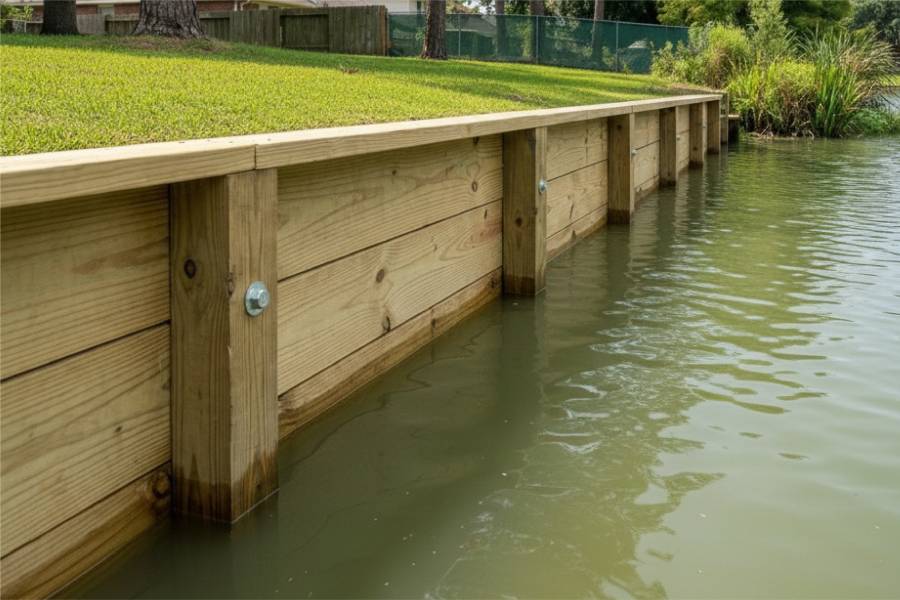
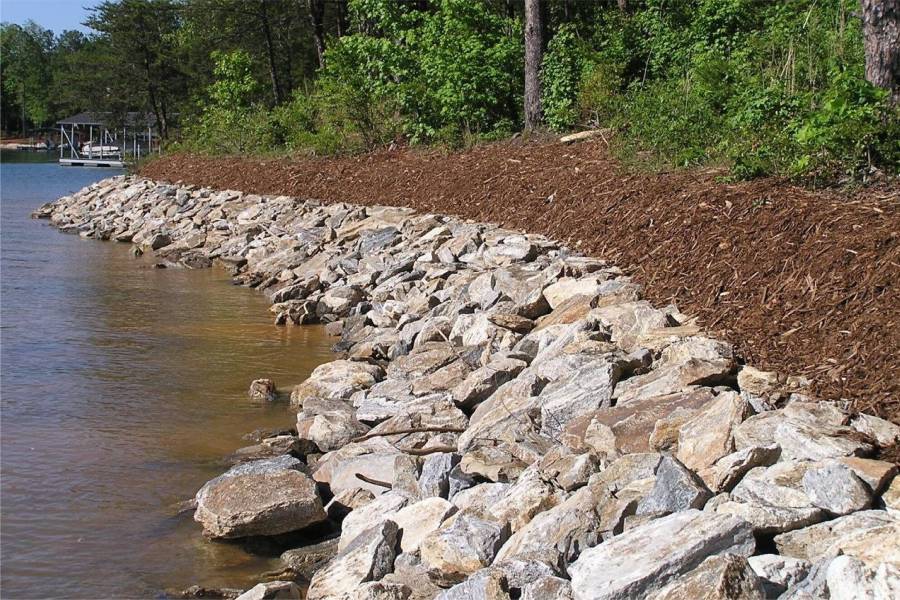
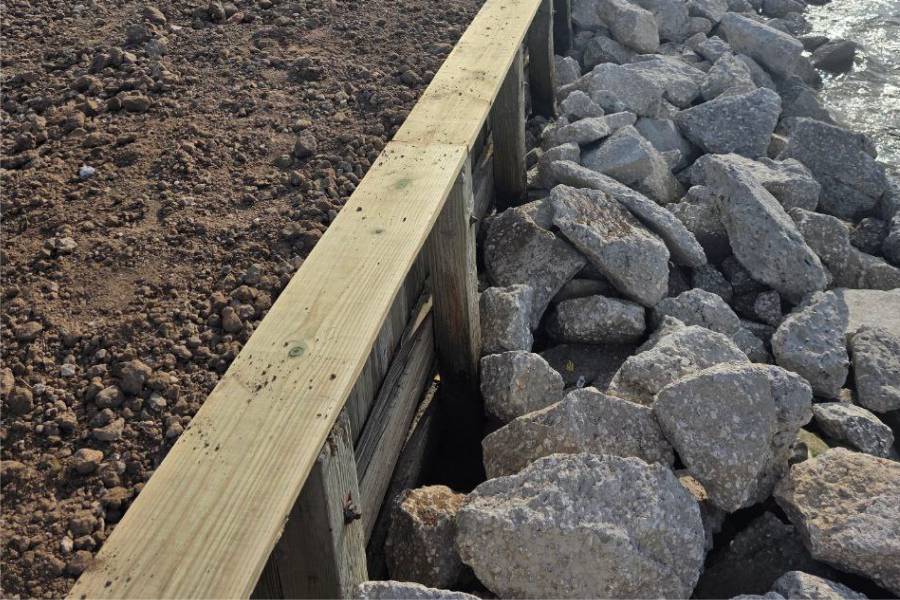
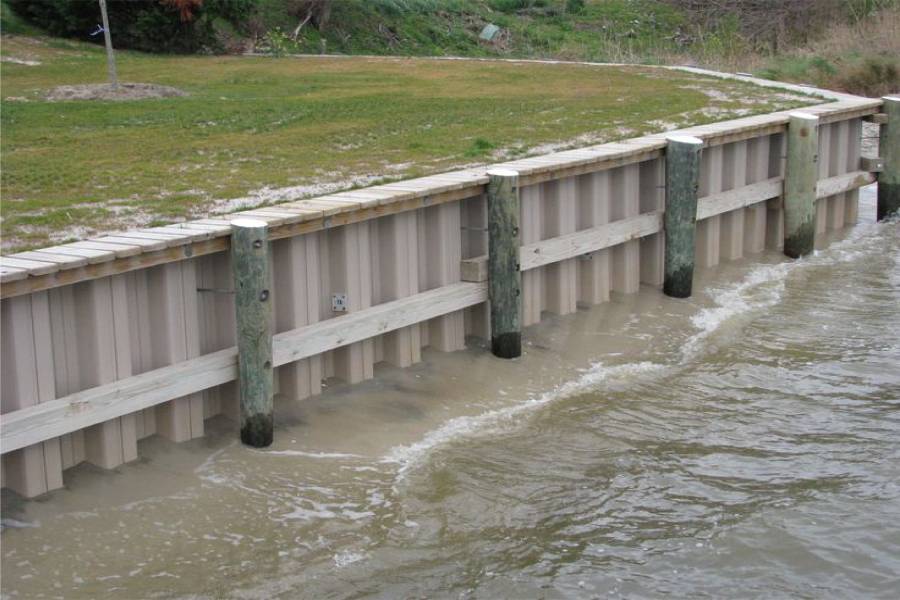
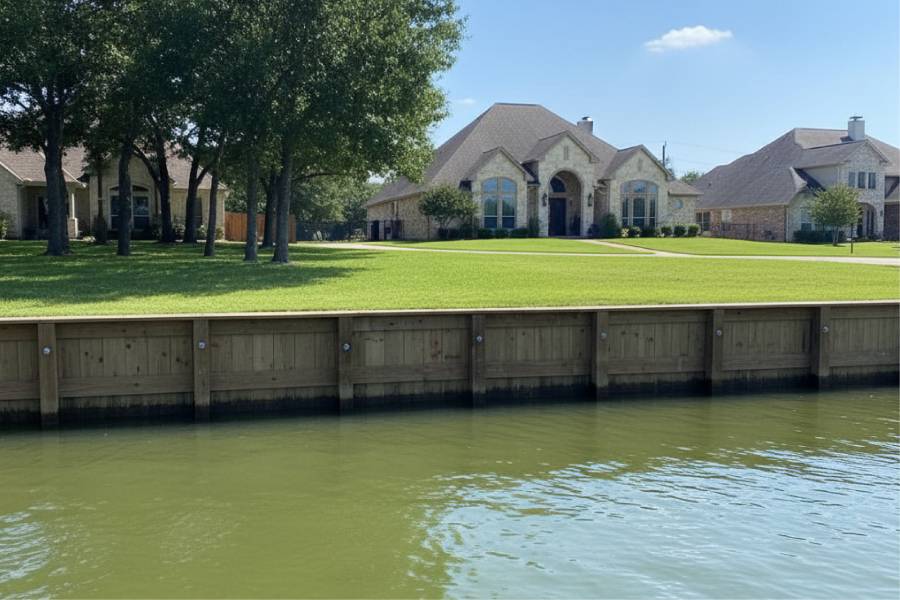
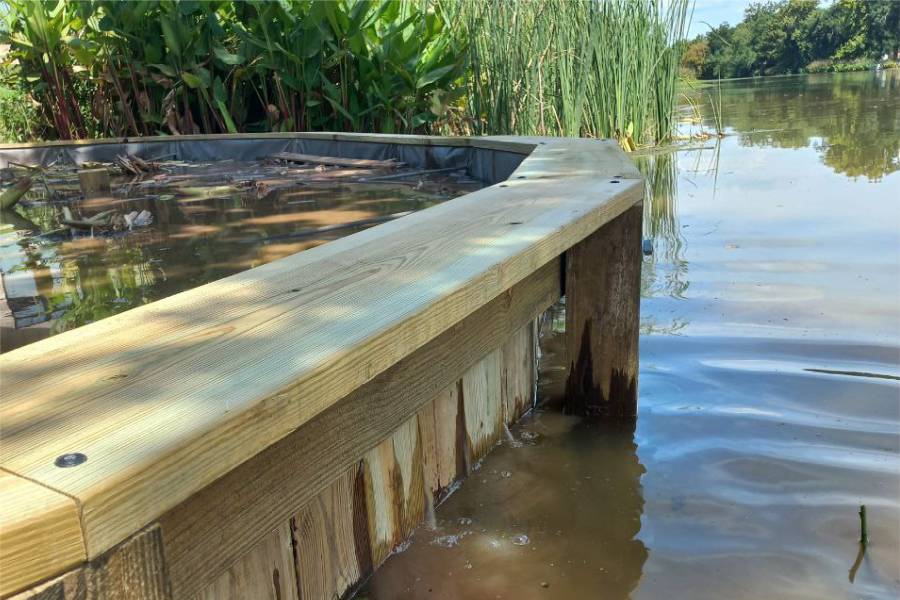
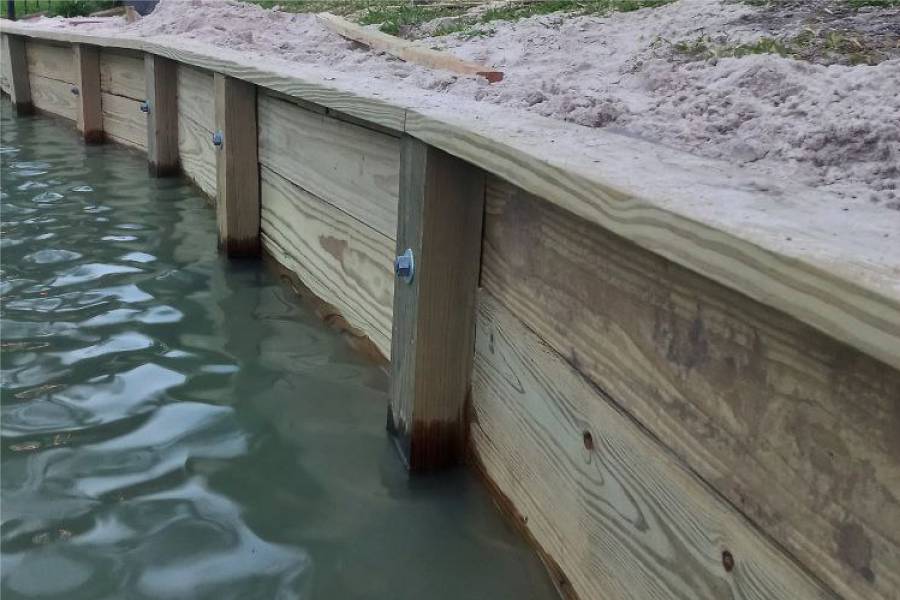
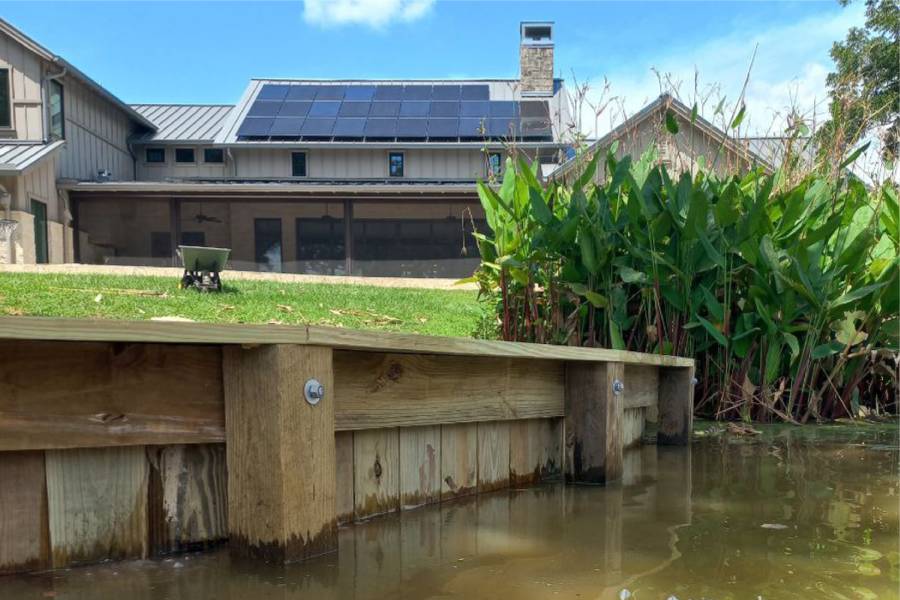
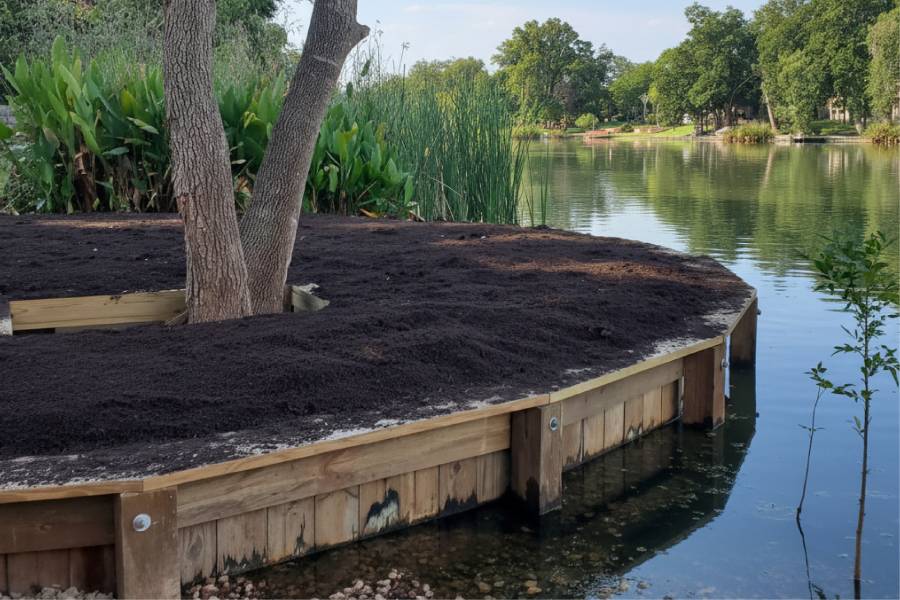
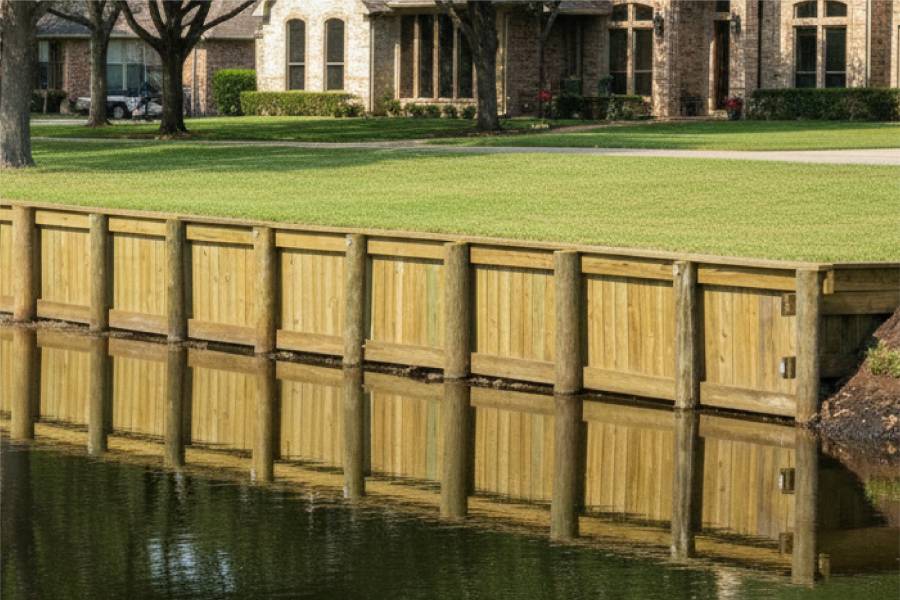
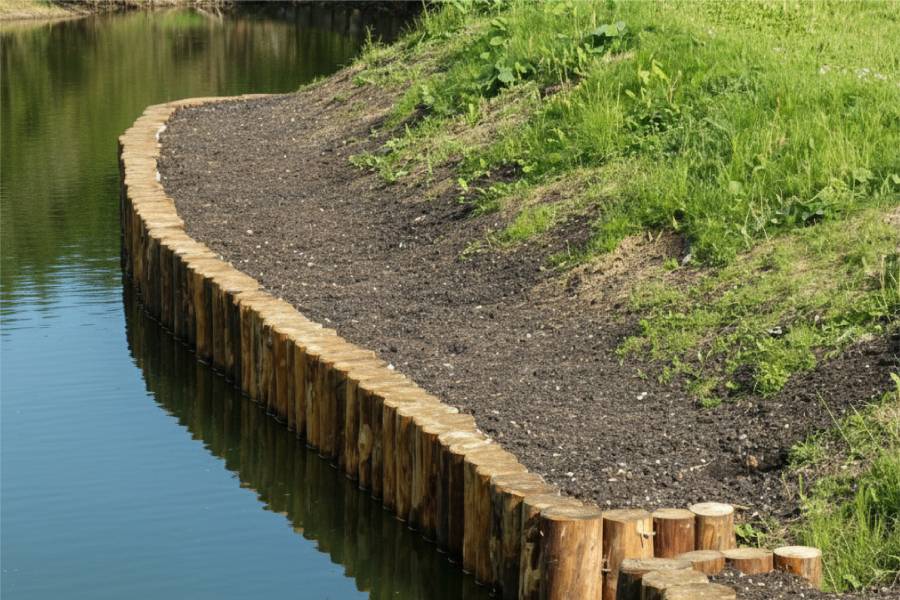
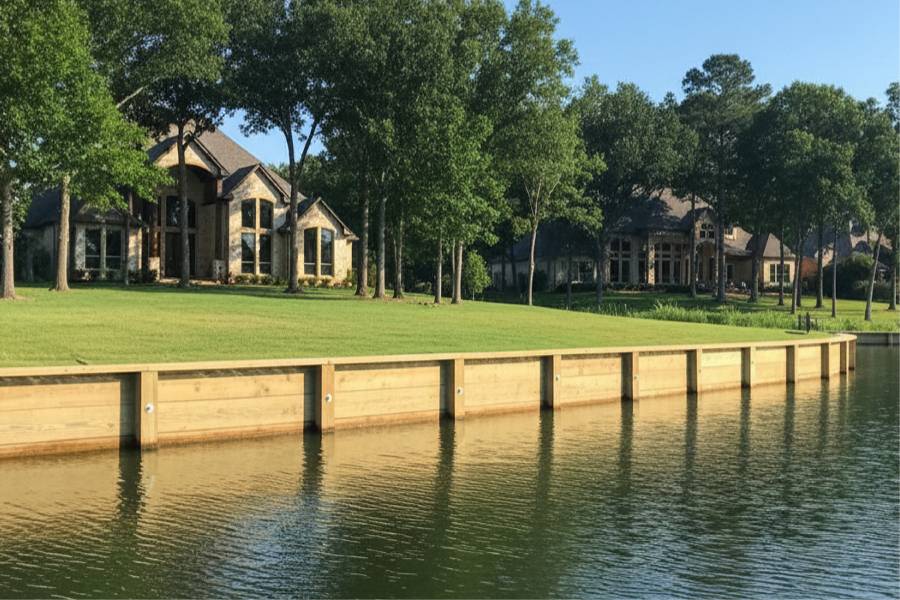
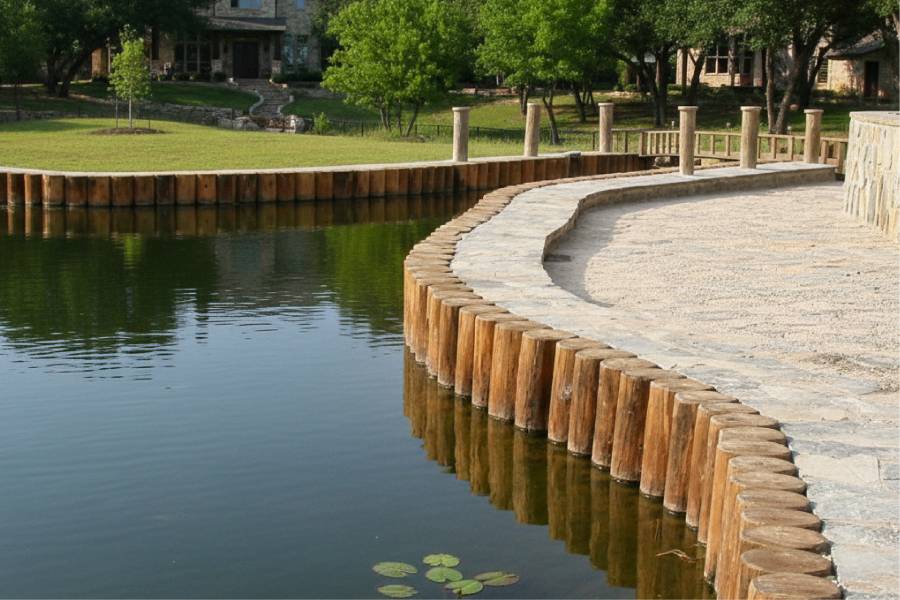
Austin bulkheads face two different lakes. Lake Austin is narrow, river-like and full of boats, so wake is the main load. Lake Travis can drop far below its normal level in a drought, leaving walls exposed, and then refill quickly after heavy rain.
Materials, starting prices and photos of completed work are on our main bulkhead services page.
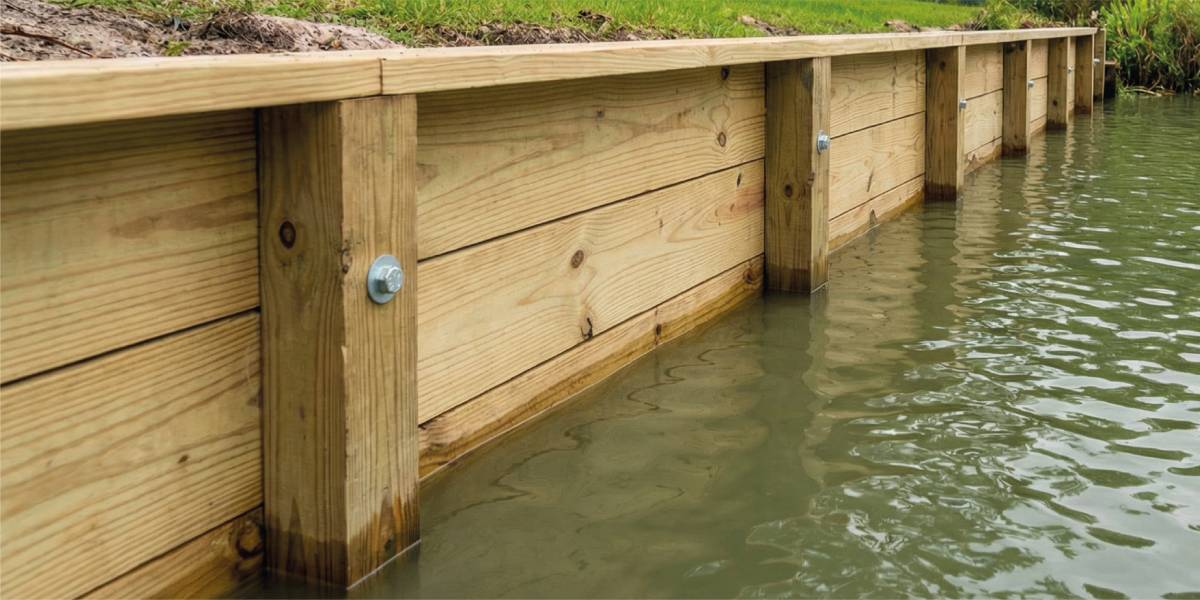
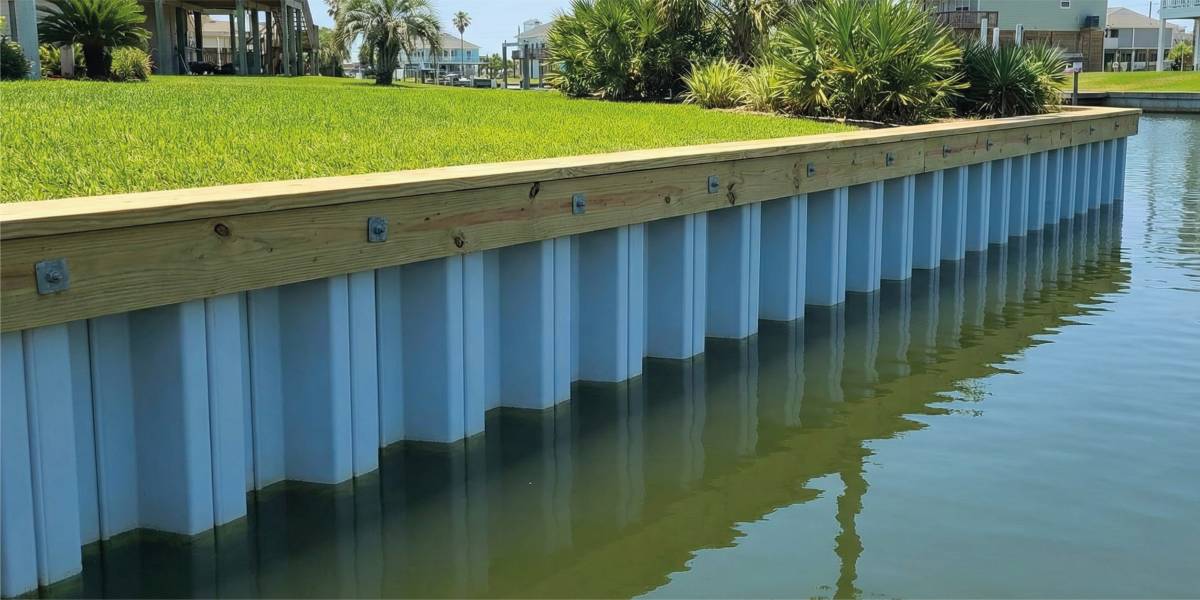
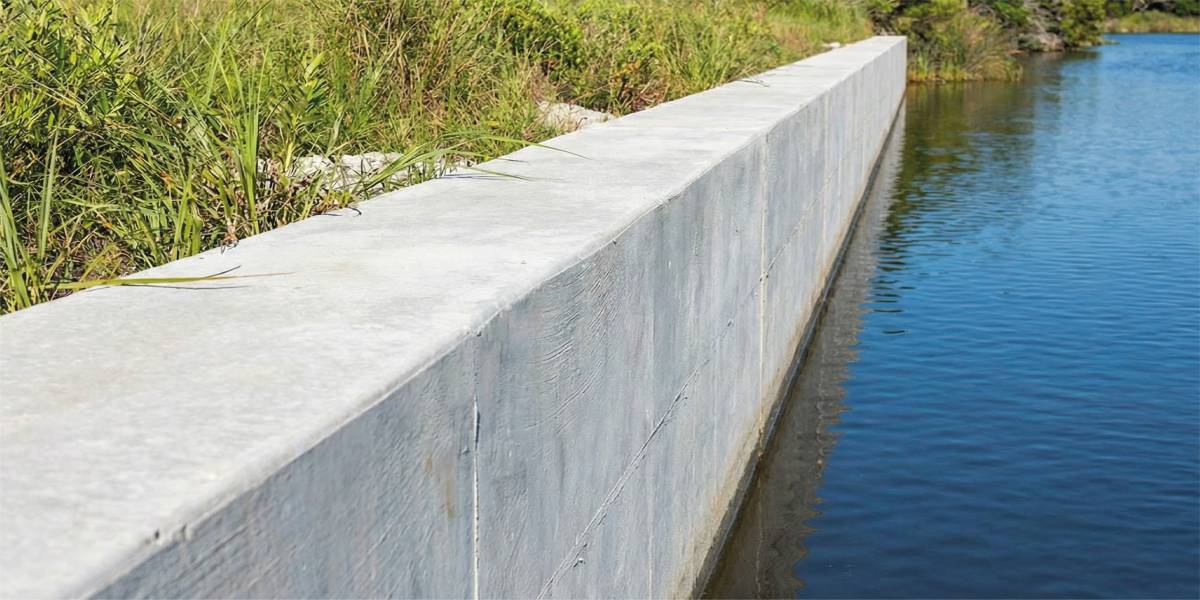
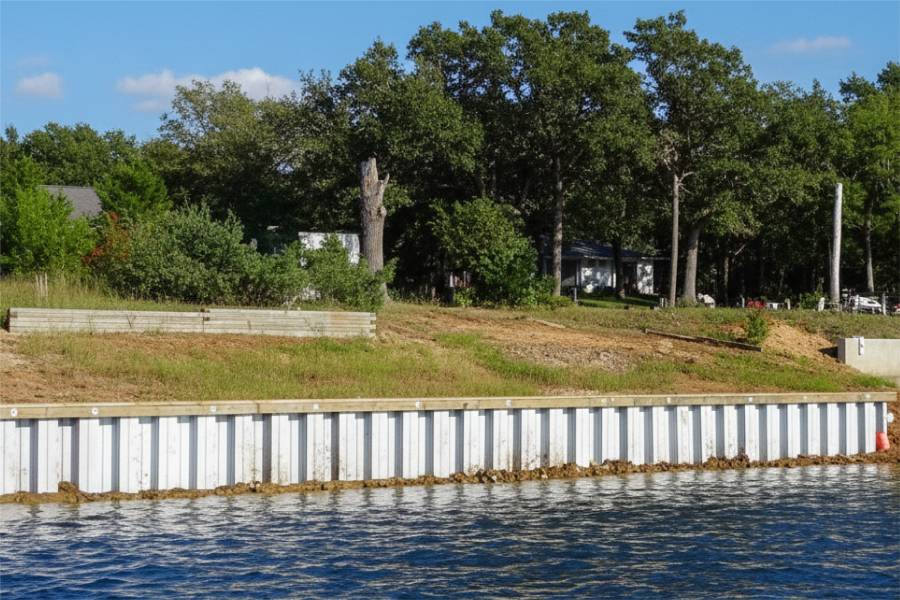
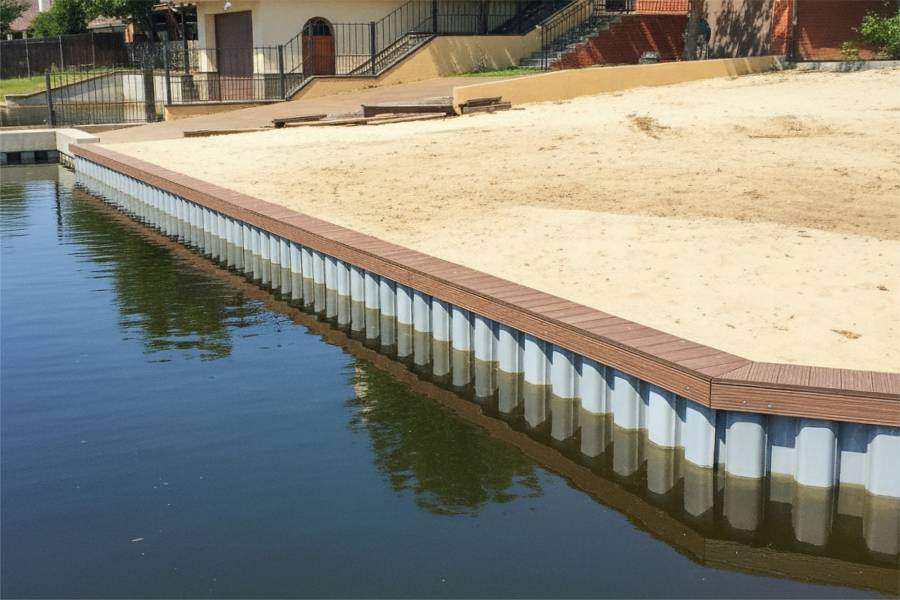
Limestone near the surface often decides how a wall is anchored, and thin soil between rocks needs careful backfill. Vinyl handles changing water well on many residential lots, while concrete suits high banks and heavy use.
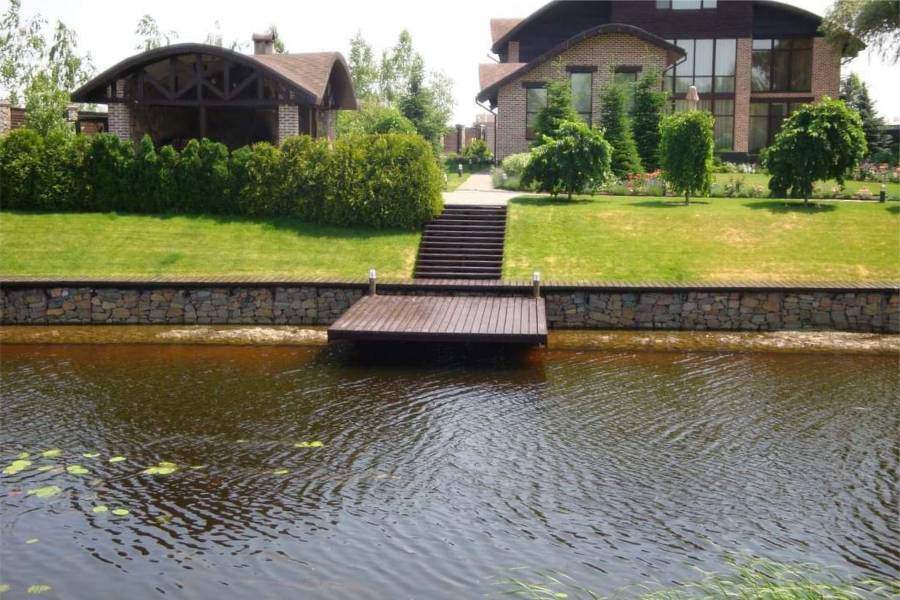
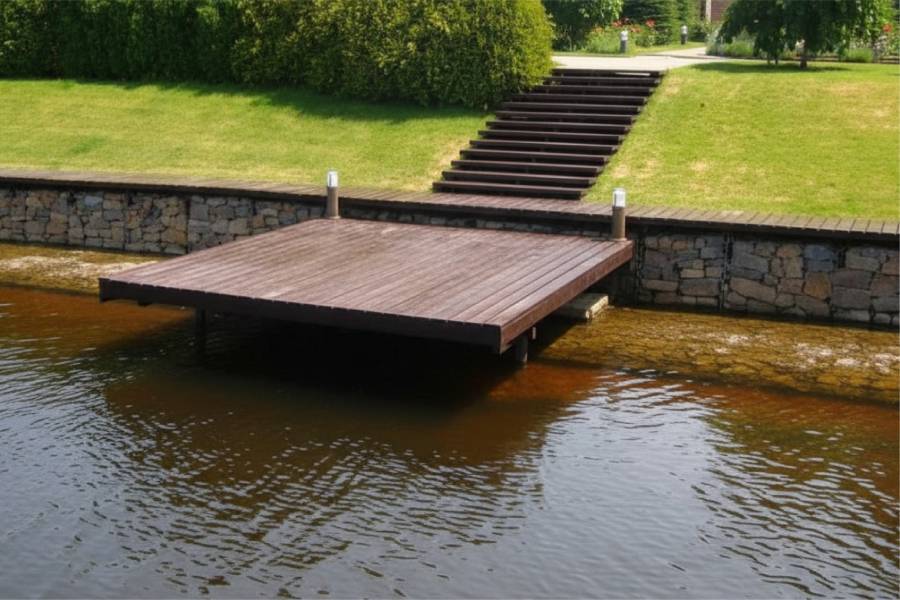
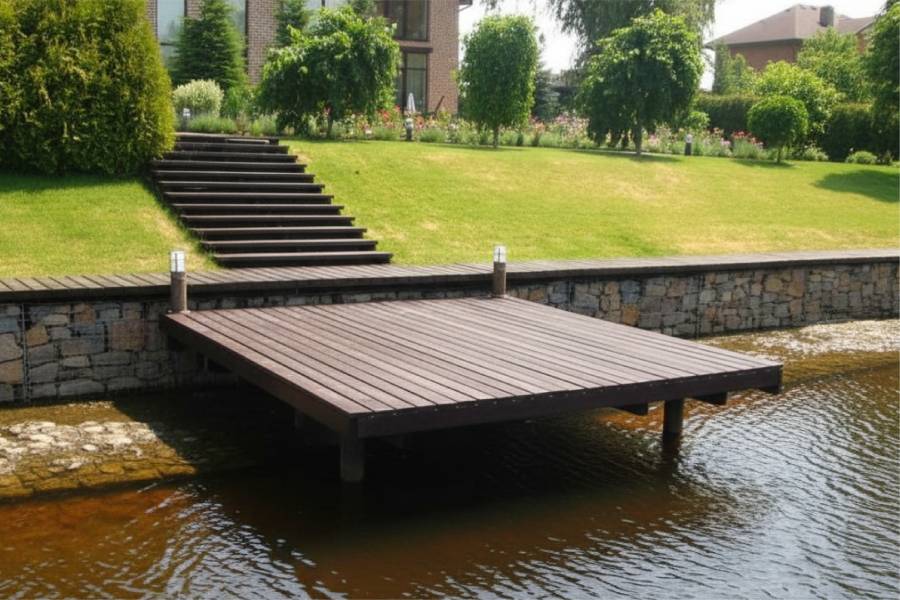
Austin lake lots often combine a bulkhead with steps, a dock landing or a boat lift. Planning these together avoids cutting into a new wall later and lets us set the wall height to match the dock and the water level you use most.
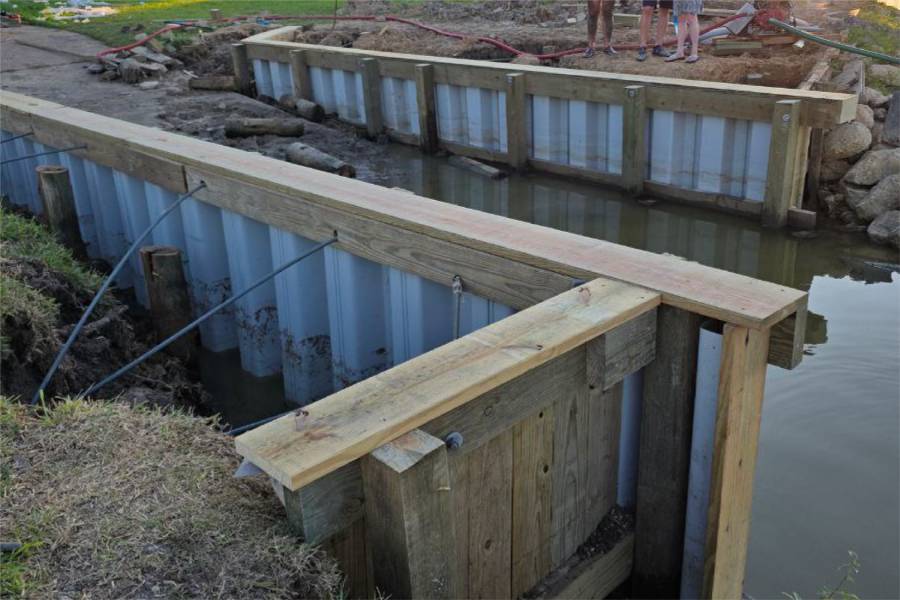
Where limestone sits just below the surface, we may drill and pin the wall to rock instead of driving sheet piling. That takes longer and costs more than work in soft soil, so we confirm the rock depth before giving a firm price.
Austin bulkhead work is often tied to a dock replacement or a new boat lift. Doing both together saves a second round of equipment and lets us set the wall height to match the dock deck.
Rock work is the main cost variable here. Where limestone is shallow, drilling and pinning take longer than driving sheet piling into soil. We confirm rock depth before giving a firm price.
Shore Protect Team builds and repairs bulkheads for Austin lake properties. Send a few photos and tell us which lake you are on, and we will give you a free first estimate.
Bulkhead Repair in Austin
Bulkhead repair starts at $100 per linear foot. On Lake Austin the usual damage comes from daily wake: open joints, soil loss behind the wall and a worn cap. On Lake Travis, low water exposes undercut footings and gaps that stay hidden at full pool, so a dry year is a good time to inspect and repair.